

Holiday woes… or business opportunity?
How I’d turn problems into benefits for this business
First published January 16, 2026
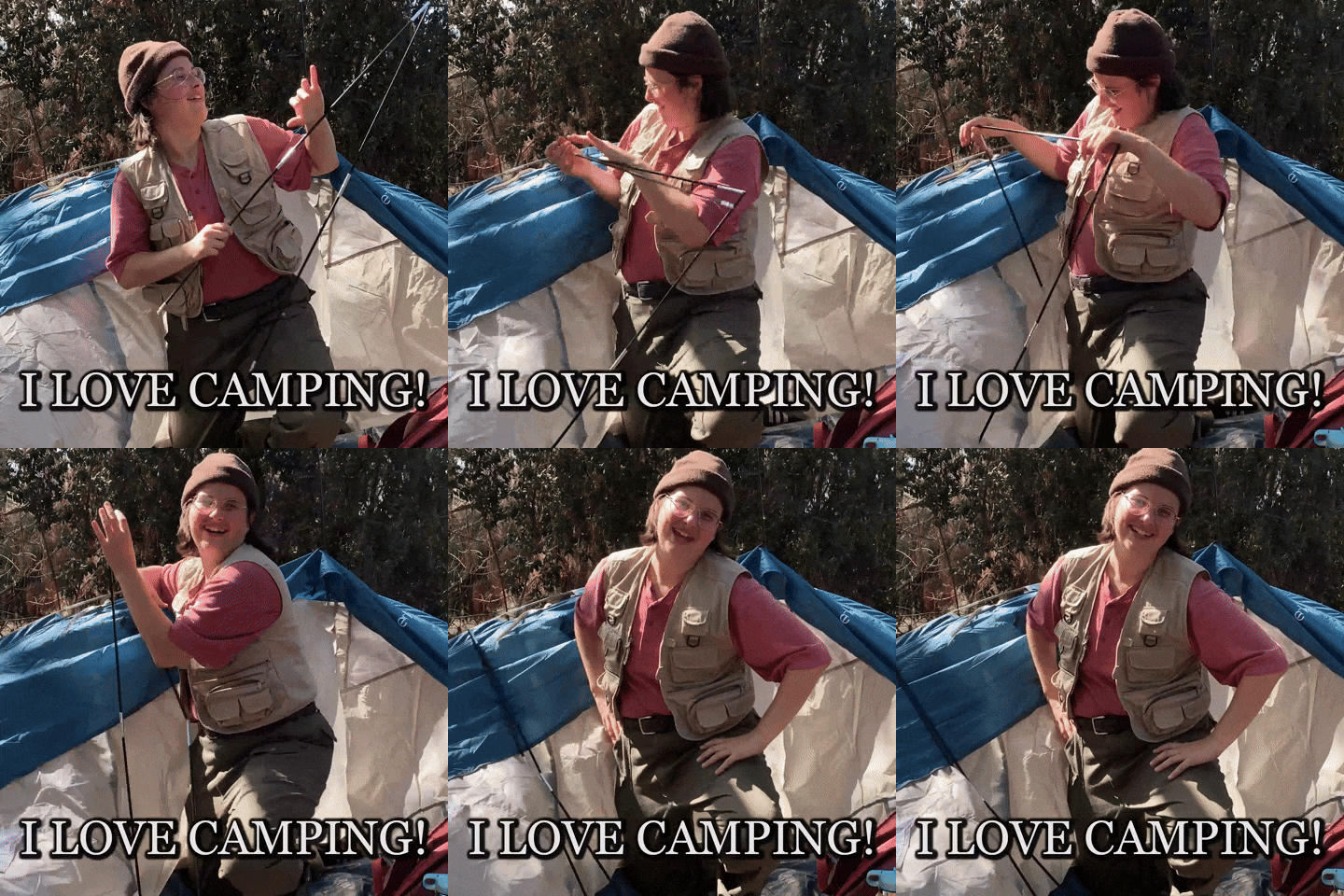
Here’s a campfire story about an experience that looked near-perfect on paper… but a few small details majorly impacted our experience.
It started out great.
Beachside, playground, ubiquitous bouncy-blob-pillow. All the family-friendly ticks.
A thoughtful pre-arrival email had run through what to expect and even a heads-up to pack some 50c coins for the arcade machines.
I loved that for us.
It felt organised and considered, and like someone had actually thought about the experience.
And it was clear they genuinely cared about the average camp punter—the email even requested on-the-go-feedback during our stay.
We arrived on site and even the tent set up wasn’t divorce-inducing.
So far, so good. Dreamy, even!
Then the in-between moments kicked in.
The email had mentioned 50c coins, but not that:
other games needed $1 and $2 coins
the washing machines were $4 a load (gold coins only)
the nearest shops were a 20-minute drive away
there was nowhere on site to get change
Six days. A gaggle of kids.
A minor oversight, or kinda crucial info?
Still, it was all manageable. Camping comes with faff. You roll with it.
What tipped things, though, was sleep. Or—the lack of it.
There were clear signs around camp about quiet hours (10pm–7am).
All pretty standard campground stuff.
The reality was… different.
Air hockey games clanging until 2am.
A neighbouring site with noise levels similar to a late-night pub gig.
Conversations—and not exactly PG ones—happening 1.5 metres from my six-year-old’s head well past midnight.
And look, I’m not overly precious.
I’ll tolerate crying babies, rowdy campers, the odd late night. That’s camping. Even found myself in an in-tent singalong to some of the neighbours’ better tunes. Silver linings!
To a point.

Much later that night, the camp had settled. General chats, some quiet music. Normal stuff.
But next door to us had not.
The kids didn’t sleep much.
We didn’t sleep much.
By day three, everyone was grumpier, whinier, and running on fumes.
Now, I’m a big fan of human convo. Building genuine rapport, a little banter here, and a casual “mind keeping it down a little..?” there (ALA Rose Byrne, Bad Neighbours ).
But these neighbours showed no interest in campside banter or chats with their fellow campers.
And this may be an 80s upbringing talking—(you tell me!?), but I’m not a natural complainer, more of a ‘choose your battles’ type.
It’s a campground!
Everyone has different schedules!
We’ll get sleep tonight!
Still, after the first hectic night when popping into reception for icecreams, I’d gently asked about the quiet hours advertised around camp. Afterall, they’d genuinely seemed keen for feedback.
“Yep—we do a walkaround,” they said, then asked if we’d had noise.
I gave a vague answer about our general area of the campground. No finger-pointing. No details. (Reader: Even so, I still felt deeply uncomfortable about this “feedback”.)
I felt kinda reassured that with the usual walkarounds, maybe it was a one-off. Par for the camping-course.
But that night… It. Was. Even. Worse.
Eventually, another camper—Karen (actual name, a nine-year regular and a lovely woman)—had had enough. Around 11.30pm she’d firmly asked the noisy crew to keep it down.
To no avail.
Others nearby were also fed up.
Next day, through my low-sleep parenting-haze, I was done rolling with it. As were various other sleep-deprived campers.
In response, the campground manager stepped in. She was not happy with the noise-makers’ lack of consideration.
There was a games-room shut down reminder and human consideration expectations were reset.
It wasn’t totally quiet after that, but it was livable.
We could drift in and out of sleep instead of lying awake with a dance floor by our heads. The tone of the stay shifted.
And the trust damage didn’t disappear, but it did start to repair.
Why it matters
Would I blindly recommend the campground? No.
Would I give them another shot? Yes.
Trust isn’t always built (or broken) in the big promises.
It’s shaped in how you handle the wobbly moments in between.
What this business could do better
(design for the in-between moments)
🏖️ Before arrival
Clear, practical comms: exact coin requirements
Set expectations upfront about quiet hours, and reminders
Optional booking prompts: young families / quieter zones where possible
🏕️ On site
Enforce the guidelines you already have
Unplug the air hockey and hide the table tennis paddles in quiet hours (!)
Add a change machine (or cash-out at reception)
⭐ At checkout
A 30-second survey, 3–5 questions max
Incentive: 10–15% off a future booking for feedback
One key question:“Did anything negatively impact your stay?”
Optional follow-up if customers want to be contacted
Happy customers aside, this is where problems turn into benefits. AKA business outcomes ✅
More on-site spend → Coins available = more games, more washing, less frustration
Higher rebooking confidence → Parents will trade almost anything for sleep! Trust = repeat visits
Better reviews → In a world full of marketing hype, real human reviews cut through. I enjoyed the stay—but I’m far less likely to leave a glowing review after poor sleep
Stronger word-of-mouth → We camp every summer with a big group. One family’s experience influences many bookings. Good chance, word of mouth here has a strong competitive edge for ROI next to paid marketing
Lower staff friction Clear systems reduce ad-hoc complaints and emotional labour at receptionAnd sometimes, a good plumber.

The very good bits of summer camping.
I’m seeing it more and more. Brand trust is built (and repaired) in the gaps.
The businesses that earn loyalty aren’t always perfect—issues will always happen. They’re responsive to the smaller, invisible moments, learning from them and designing for them to protect trust.
And the brands that use these wobbles and woes to their advantage can repair, or build trust—as well as their business.
Get 20 years of brand perspective in your inbox, fortnightly.
First published January 2026.
This content is for general information only and not intended as specific advice.


